
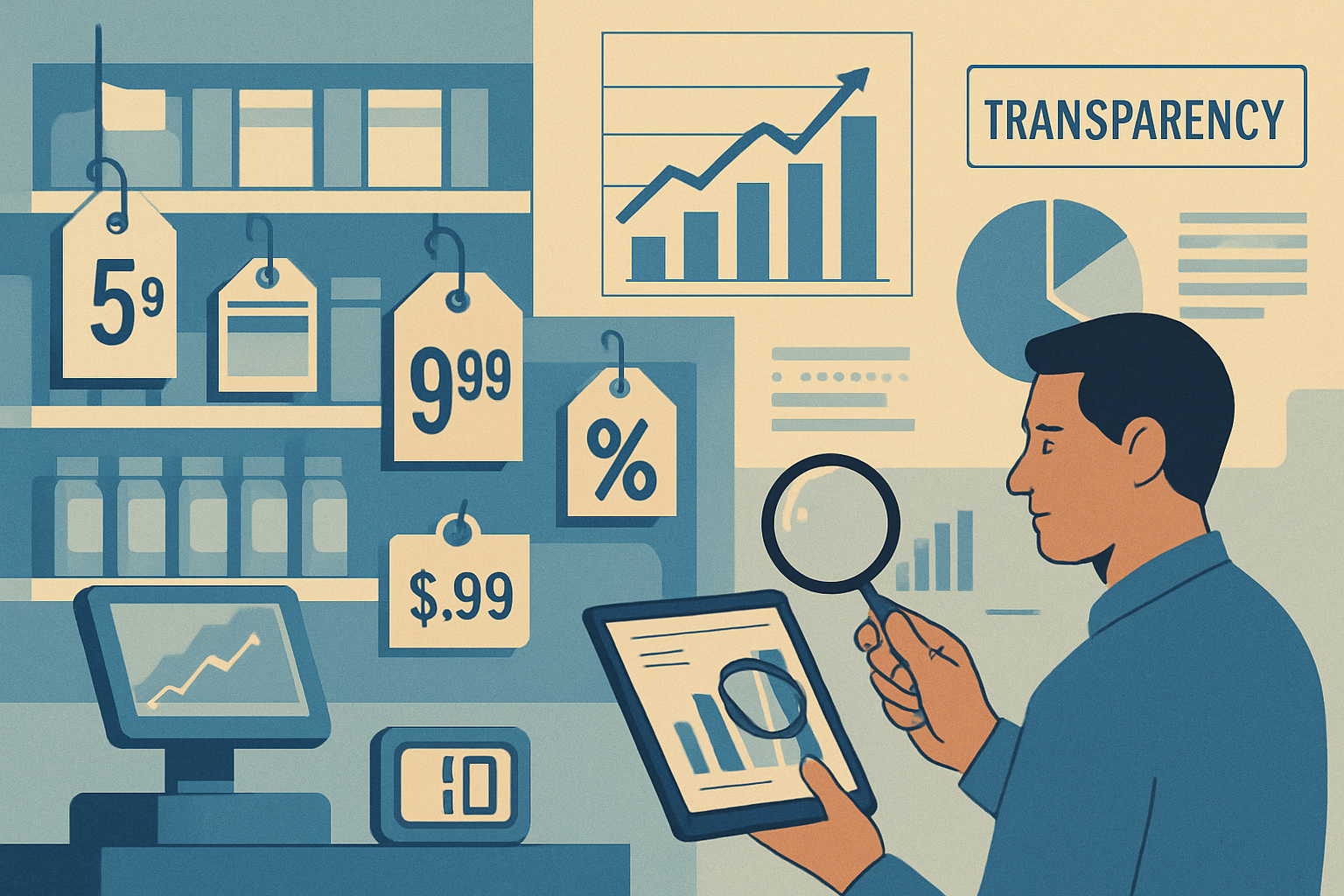

This article explores the importance of data quality, freshness, and transparency in retail price-intelligence systems, highlighting responsible AI practices.
Introduction to Price Intelligence in Retail
Price intelligence systems play a crucial role in the retail and electronics sectors by providing businesses with insights into product pricing. As competition intensifies, retailers increasingly rely on accurate and timely data to inform their pricing strategies. However, the effectiveness of these systems hinges on the quality and transparency of the data they utilize.
In today's digital marketplace, consumers have access to a wealth of information, making it essential for retailers to stay competitive. Price intelligence systems help retailers monitor competitors' prices, understand market trends, and optimize their pricing strategies accordingly. This competitive edge can be the difference between a thriving business and one that struggles to keep up with market demands.
Moreover, as technology evolves, so do consumer expectations. Retailers must not only provide competitive prices but also ensure that their pricing strategies are informed by reliable data. This necessity underscores the importance of maintaining high standards for data quality, freshness, and transparency in price intelligence systems.
The Significance of Data Quality
Data quality is paramount in price-intelligence systems. High-quality data ensures that retailers make informed decisions based on accurate pricing information. For instance, the Beats Solo4 Wireless Headphones, priced at ZAR 4799.0 at Incredible Connection in South Africa, illustrate a scenario where consistent pricing data can provide clarity. With 43 observations recorded from July 1, 2026, to September 3, 2026, the data shows no fluctuations in price, indicating a stable market position for this product.
The stability reflected in the pricing of the Beats Solo4 Wireless Headphones suggests that the product may be well-positioned in the market, possibly due to brand loyalty or a lack of competitive alternatives. Retailers can leverage this information to understand consumer behavior and make strategic decisions about inventory management and marketing efforts. For example, if a retailer knows that a product has maintained a consistent price point, they may choose to invest in promotional campaigns to attract more customers.
Conversely, the Bose QuietComfort Ultra Headphones, listed at EUR 309.0 at Mi Electro in Spain, reflects an observation period of only one day, September 4, 2026. While this single data point provides a snapshot of pricing, it lacks the robustness that multiple observations can offer. This discrepancy highlights the necessity for diverse data points to ensure reliability in price assessments. A single observation may not capture the true dynamics of the market, leading to potentially misguided pricing strategies.
Understanding Freshness in Price Data
Freshness of data is equally important as quality. In the fast-paced retail environment, price changes can occur rapidly, and outdated information can lead to poor decision-making. The observation of the Beats Solo4 Wireless Headphones shows a consistent price over a two-month period, which suggests that the product's pricing strategy may be stable. However, the lack of price change also raises questions about market competitiveness and the potential for missed opportunities in pricing adjustments.
For retailers, understanding the freshness of price data can inform their strategies for promotions and discounts. If a product's price remains unchanged, it may indicate that the retailer is confident in its pricing strategy, or it may suggest that they are not responding to market pressures effectively. Retailers must continuously evaluate their pricing strategies in light of fresh data to remain competitive and responsive to consumer needs.
In contrast, the Bose QuietComfort Ultra Headphones, with only one observation, does not provide a comprehensive view of pricing trends. Freshness is critical for understanding market dynamics, and a single data point can lead to misinterpretations of a product's market position. Retailers relying on such limited data may find themselves at a disadvantage, unable to adapt to changing consumer preferences or competitive pricing strategies.
Transparent Assumptions in Price Reporting
Transparency in the assumptions underlying price data reporting is essential for building trust with users of price-intelligence products. Retailers must understand the context in which price data is collected and reported. For example, the consistent pricing of the Beats Solo4 Wireless Headphones suggests that there may be a deliberate pricing strategy at play, potentially indicating a lack of competitive pressure or a premium positioning.
When retailers have access to transparent data, they can better assess the reliability of the information and make informed decisions. This transparency allows them to understand not just the price points but also the factors influencing those prices, such as market demand, competitor actions, and consumer behavior. By comprehensively understanding the context, retailers can develop more effective pricing strategies that align with their business goals.
On the other hand, the single observation of the Bose QuietComfort Ultra Headphones raises questions about the representativeness of the data. Without clear explanations of how and when data is collected, users may struggle to interpret the significance of the reported prices. Transparent methodologies enable retailers to assess the reliability of the data and make more informed pricing decisions. This lack of clarity can lead to uncertainty and hesitation in pricing strategies, ultimately impacting a retailer's competitiveness.
Responsible AI Summaries in Price Intelligence
As artificial intelligence becomes increasingly integrated into price-intelligence systems, the need for responsible AI practices is paramount. AI-driven summaries of pricing data must be based on sound methodologies and should reflect the nuances of the data. For example, the average price of the Beats Solo4 Wireless Headphones remains at ZAR 4799.0, with a median, minimum, and maximum price also at this level, indicating zero volatility in this instance.
The stability of the data for the Beats Solo4 Wireless Headphones allows AI systems to provide reliable insights into pricing trends. However, the same cannot be said for the Bose QuietComfort Ultra Headphones, which, with a single observation, cannot provide a meaningful average or median. AI systems must be designed to recognize the limitations of such data and communicate these limitations effectively to users. By doing so, AI can enhance decision-making rather than obscure the realities of the pricing landscape.
Furthermore, responsible AI practices involve ensuring that the algorithms used to analyze pricing data are transparent and interpretable. Retailers should be able to understand how AI-generated insights are derived and how they can be applied to their pricing strategies. This understanding fosters trust in AI systems and encourages retailers to leverage these tools for more informed decision-making.
Practical Use Cases for Price Intelligence
Retailers can leverage price-intelligence systems to optimize their pricing strategies. For instance, the consistent pricing of the Beats Solo4 Wireless Headphones can serve as a benchmark for competitors looking to enter the market or adjust their pricing strategies. Understanding the stability of this price point can inform decisions about promotional strategies or product positioning. Retailers may choose to offer bundled deals or discounts to attract customers without undermining the perceived value of the product.
Conversely, the single observation of the Bose QuietComfort Ultra Headphones may prompt retailers to conduct further research into market trends or consumer preferences. This highlights the importance of using price-intelligence systems not just for immediate pricing decisions but also for long-term strategic planning. Retailers can use insights from price intelligence to identify emerging trends and adapt their product offerings accordingly, ensuring they remain competitive in a rapidly changing market.
Additionally, price intelligence can aid retailers in managing inventory more effectively. By analyzing pricing trends and consumer behavior, retailers can make informed decisions about when to restock products or when to offer discounts to clear out inventory. This strategic approach can lead to improved cash flow and reduced holding costs, ultimately enhancing overall profitability.
Implications for Retailers and Consumers
The implications of data quality, freshness, and transparency in price-intelligence systems extend beyond retailers to consumers as well. Accurate and timely pricing information enables retailers to offer competitive prices, ultimately benefiting consumers. For example, if retailers can rely on stable data for products like the Beats Solo4 Wireless Headphones, they may be more inclined to offer price matching or promotional discounts. This competitive pricing environment can lead to better deals for consumers and increased customer satisfaction.
On the consumer side, understanding the context of price data can empower shoppers to make informed purchasing decisions. When consumers are aware of the pricing dynamics of products like the Bose QuietComfort Ultra Headphones, they can better assess whether a price is fair or if they should wait for potential discounts. This knowledge can lead to more strategic purchasing behaviors, as consumers become more adept at recognizing value and timing their purchases.
Moreover, as consumers become more informed about pricing trends and market dynamics, they may demand greater transparency from retailers. This shift in consumer expectations can drive retailers to adopt more responsible pricing practices, ultimately benefiting both parties. Retailers that prioritize transparency and data quality will likely build stronger relationships with their customers, fostering loyalty and repeat business.
Conclusion: The Path Forward for Price-Intelligence Systems
In conclusion, building responsible price-intelligence products requires a commitment to data quality, freshness, and transparency. As illustrated by the observations of the Beats Solo4 Wireless Headphones and the Bose QuietComfort Ultra Headphones, the robustness of data is critical for effective pricing strategies. Retailers must prioritize diverse and timely data collection methods to ensure they can respond to market changes effectively. This proactive approach will enable retailers to remain competitive and adapt to evolving consumer preferences.
Moreover, integrating responsible AI practices into price-intelligence systems will enhance the reliability of AI-driven insights, fostering trust among users. By focusing on these principles, retailers can create more effective pricing strategies that benefit their businesses and consumers alike. As the landscape of retail continues to evolve, the importance of responsible data practices will only grow, making it imperative for retailers to stay ahead of the curve.
Ultimately, the future of price intelligence lies in a collaborative approach that prioritizes data integrity and transparency. By working together, retailers, consumers, and technology providers can create a more informed and competitive marketplace that benefits everyone involved. This commitment to responsible practices will pave the way for a more sustainable and equitable retail environment.
Key takeaways
- Data quality is essential for accurate price intelligence, as demonstrated by consistent pricing of the Beats Solo headphones.
- Freshness of data impacts decision-making; single observations may not reflect market trends effectively.
- Transparent assumptions in price reporting build trust and help retailers interpret pricing data accurately.
- Responsible AI practices are necessary to ensure AI-driven insights are based on sound methodologies.
- Retailers can leverage price intelligence for strategic planning, benefiting both their pricing strategies and consumers.
- Understanding the context of pricing data empowers consumers to make informed purchasing decisions.
Methodology and limitations
The data presented includes observations from two products: Beats Solo4 Wireless Headphones with 43 observations from July 1, 2026, to September 3, 2026, and Bose QuietComfort Ultra Headphones with a single observation on September 4, 2026. The analysis focuses on descriptive statistics, including average, median, minimum, maximum prices, and percentage change. Limitations include the small sample size and the lack of temporal diversity in the Bose product data.
This article was prepared with AI assistance and checked against the Open Price Engine observations cited in the article. It is informational and should not be treated as investment, economic-policy, or purchasing advice.